210 Pictionary Words: Easy, Medium, and Hard (Game-Night Ready)
Pictionary words are short, drawable prompts that players sketch while their team guesses. A good list mixes simple objects, everyday actions, and a few tricky abstract ideas so every round feels fair and fun. This post gives you 210 ready-to-play Pictionary words, sorted into 70 easy, 70 medium, and 70 hard options for game night.
In this post:
- What makes a word good for Pictionary (and what ruins a round)
- How to play with a word list, including five simple house rules
- How to choose the right difficulty for kids, teens, and adults
- 70 easy, 70 medium, and 70 hard Pictionary words
- How to keep rounds fair when drawing skills differ
What Makes a Good Pictionary Word?
A good Pictionary word is a picture waiting to happen. Simple nouns you can sketch in three shapes, like an apple, a house, or a car, are perfect for warm-ups and for kids. Action words and compound phrases, like swimming, campfire, or birthday party, give confident drawers something to chew on. The best lists also include a few abstract words, like friendship, gravity, or procrastination, because those spark the funniest guesses.
A bad Pictionary word does the opposite. If you cannot sketch it without writing letters, it is not a Pictionary word. It is a spelling test. I have seen rounds stall on words like “onomatopoeia” because half the team was stuck on spelling while the drawer waved helplessly. Keep one simple test in mind: if you can express the word with a stick figure, a circle, and an arrow, it belongs on the list.
Agree on the difficulty spread before you play. A deck that is ninety percent hard words makes beginners quit early. The 70-70-70 split in this post is deliberate. Start easy, build confidence, then drop the hard cards in once the room is warmed up and laughing.
The quotable truth: The best Pictionary word is not the cleverest one. It is the one everyone can almost guess.
How Do You Play Pictionary With a Word List?
The classic setup is simple. Split into two or more teams, grab a drawing surface and a marker, and set a timer for sixty seconds. One player from a team draws a word picked blind from the list while teammates guess. No letters, no numbers, no talking, and no pointing at the real object. Here are five house rules that make a plain word list play better than the boxed game.
How long should each round last?
Sixty seconds is the sweet spot for most groups. It is long enough to plan the sketch and short enough to keep the energy up. For kids under eight, stretch it to ninety seconds so drawing does not feel rushed.
Can the drawer use letters or symbols?
No. This is the one rule that makes Pictionary Pictionary. Letters, numbers, arrows, and rebus tricks (an eye plus a can for “I can”) are all banned. You draw the meaning, not the spelling. Teams that enforce this rule enjoy the hard words far more.
How does scoring work?
Keep it simple: one point for each correct guess, plus a bonus point if the team guesses in under thirty seconds. Play to ten points or set a fixed round count, whichever your group prefers. Write the score down.
What if the word is impossible to draw?
Every list has that one word that breaks a drawer’s brain. Allow each player one pass per game with no penalty. The passed word goes back at the bottom of the list and the drawer takes a new one. One pass keeps the game moving and the mood light.
Who draws, and how often?
Rotate the drawer every round. Without rotation, the confident artist hogs the marker and everyone else becomes a permanent guesser. Mixed groups stay friendlier when everyone takes a turn at the board.
Out of Cards Mid-Party? Get Random Words Instantly.
One click gives you a fresh, unbiased word. No repeats, no planning, no arguments about who picked the deck.
How Do You Pick Pictionary Words for Kids vs Adults?
For kids under ten, stay in the easy column and pick concrete nouns. If a child can point to it in the room, they can draw it. Animals, food, and household objects are gold. Skip abstract words entirely at this age. Asking a seven-year-old to draw “democracy” ends with tears and an abandoned marker.
Teens handle medium words well, especially actions and scenes with social energy. They also enjoy the pressure of hard rounds, so introduce the hard column in the second half of the night once confidence is high.
For adults, mix all three levels from the start. Easy words are secretly perfect for grown-ups because they breed overconfidence, and nothing is funnier than an adult botching a drawing of a banana. Keep a stack of hard abstract words ready for tie-breakers. That is where adult game night turns competitive.
Mixed ages? Pair each kid with an adult teammate and let the kid draw the easy words while adults tackle the hard ones. Everyone contributes, nobody feels stuck, and the kid-drawn guesses are usually the highlight of the night.
Easy Pictionary Words
Start here for kids, warm-ups, and groups that have never played. Every word below is a concrete object or simple scene that takes seconds to sketch. The first round sets the tone for the whole night, so make it easy enough that everyone scores.
Apple, Banana, Car, House, Tree, Dog, Cat, Fish, Sun, Moon, Star, Flower, Book, Chair, Table, Hat, Shoe, Ball, Bike, Boat, Bird, Bear, Cup, Key, Lock, Door, Window, Bed, Lamp, Clock, Phone, Computer, TV, Camera, Guitar, Drum, Piano, Train, Plane, Truck, Bus, Ice cream, Pizza, Cake, Cookie, Donut, Umbrella, Rain, Snow, Cloud, Mountain, Beach, River, Bridge, Flag, Balloon, Kite, Gift, Candle, Mirror, Pillow, Blanket, Scissors, Pencil, Crayon, Paper, Backpack, Sunglasses, Crown, Ring
Medium Pictionary Words
This column is the main engine of a good game night. Actions, jobs, and scenes that take a real sketch and a sharp guesser. When the easy deck feels too simple and the hard deck feels unfair, live here for a while.
Swinging, Dancing, Swimming, Running, Jumping, Climbing, Sleeping, Eating, Drinking, Reading, Writing, Laughing, Crying, Shouting, Whispering, Snowman, Spaceship, Firefighter, Teacher, Doctor, Chef, Astronaut, Pirate, Mermaid, Wizard, Knight, Castle, Volcano, Waterfall, Lighthouse, Campfire, Tent, Sleeping bag, Fishing, Cooking, Baking, Gardening, Painting, Building, Shopping, Picnic, Birthday party, Wedding, Movie theater, Roller coaster, Ferris wheel, Playground, Sandbox, Toilet, Broom, Wrench, Hammer, Drill, Ladder, Rope, Kettle, Blender, Microwave, Refrigerator, Dishwasher, Vacuum cleaner, Ironing, Snowboarding, Skateboarding, Surfing, Diving, Skiing, Hiking boots, Bowling, Golf
Hard Pictionary Words
This is where Pictionary stops being a drawing game and starts being a mind-reading game. Abstract ideas, natural events, and concepts with no single image. Save these for experienced players, tie-breakers, and the last hour of the night.
Brainstorm, Friendship, Love, Happiness, Sadness, Jealousy, Courage, Freedom, Wisdom, Imagination, Dream, Memory, Forgetfulness, Patience, Curiosity, Honesty, Trust, Respect, Teamwork, Confidence, Anxiety, Nostalgia, Boredom, Excitement, Surprise, Disappointment, Gravity, Electricity, Magnetism, Time, Eternity, Evolution, Democracy, Economy, Population, Traffic jam, Procrastination, Meditation, Teleportation, Whirlwind, Earthquake, Thunderstorm, Sunrise, Sunset, Full moon, Solar eclipse, Aurora borealis, Constellation, Black hole, Rocket launch, Spacewalk, Underwater, Desert island, Tightrope walking, Stage fright, Helicopter, Submarine, Hot air balloon, Fire alarm, Power outage, Internet, Satellite, Microphone, Concert, Applause, Standing ovation, Award ceremony, Celebration, Jet lag, Inspiration
How Do You Keep Rounds Fair When Skill Levels Differ?
The drawer problem is real. In most groups one person draws like an illustrator and another draws like a sleep-deprived toddler. The fix is handicaps, not pity rules. Strong drawers get a forty-five second timer. Beginners get ninety. Same word, different pressure, and the points stay close.
You can also split the decks by skill. Weaker drawers pull from the easy column for the first two rounds while strong drawers take from the medium column. The challenge stays balanced even when the skill does not. Rotate teams every three rounds too, so no team becomes a fixed hierarchy.
The quotable truth: Fair Pictionary is not about equal drawing skill. It is about equal pressure.
Drawing Better From a Reference Image?
Picture mode shows real images of each word. See it, sketch it, win the round.
What are the best words for Pictionary?
Easy, concrete nouns like apple, house, and dog work best for most groups because anyone can sketch them in seconds. Mix in everyday actions and scenes for variety, and save abstract words like freedom or gravity for experienced players. The right list always matches the group’s age and drawing confidence, so lean on the easy column for kids.
How many words do you need for Pictionary?
A typical game night uses 30 to 50 words, depending on team count and how many rounds you play. A bank of 200 or more means you never repeat words across weekly sessions, which keeps regular game nights fresh. This post’s 210-word list covers several evenings of play for most groups without running dry.
Can kids play Pictionary with these words?
Yes. The 70 easy words are simple, concrete objects kids can draw and guess: animals, foods, and household items. Skip the medium and hard sections for children under ten, and give young drawers a longer timer so drawing feels fun, not rushed. Pairing each child with an adult teammate keeps mixed-age game nights enjoyable for everyone.
How do you make Pictionary harder for experienced players?
Use abstract and compound words that cannot be sketched literally, like procrastination, black hole, or standing ovation. Shorten the timer to forty-five seconds and retire the easy deck for the night. Experienced groups also enjoy a one-guess rule: each team gets exactly one official guess per round, which raises the stakes fast.
Where can I get random Pictionary words online?
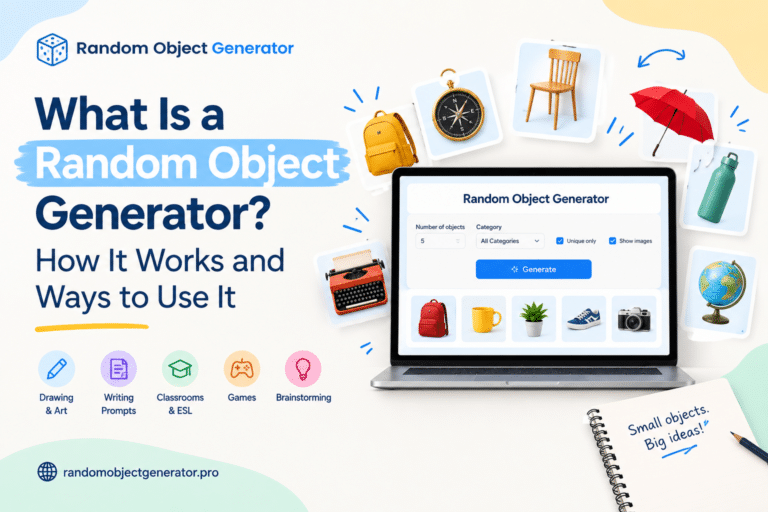
Our free random object generator gives you fresh, unbiased words with one click, which beats recycling the same tired list every game night. Its picture mode shows real images of each word, which helps players who draw better from a visual reference. Use it mid-party when you run out of cards, or to add surprise words nobody prepared for.
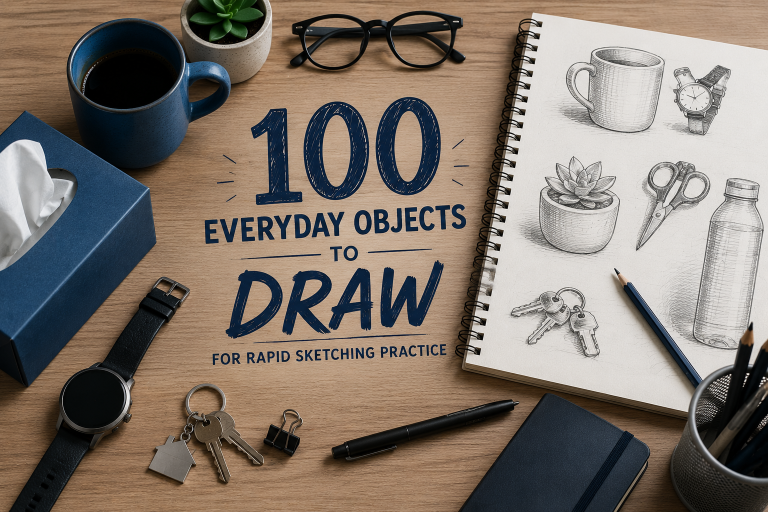
Game night does not end here. If your group wants drawing practice between sessions, our everyday objects to draw collection and things to draw when bored list are full of warm-up sketches. Teachers can adapt these same words for classroom warm-up games. We are also building a dedicated Pictionary word generator that will draw random words straight from this list (coming soon). For now, bookmark this page, grab a marker, and may your stick figures be ever in your favor.