
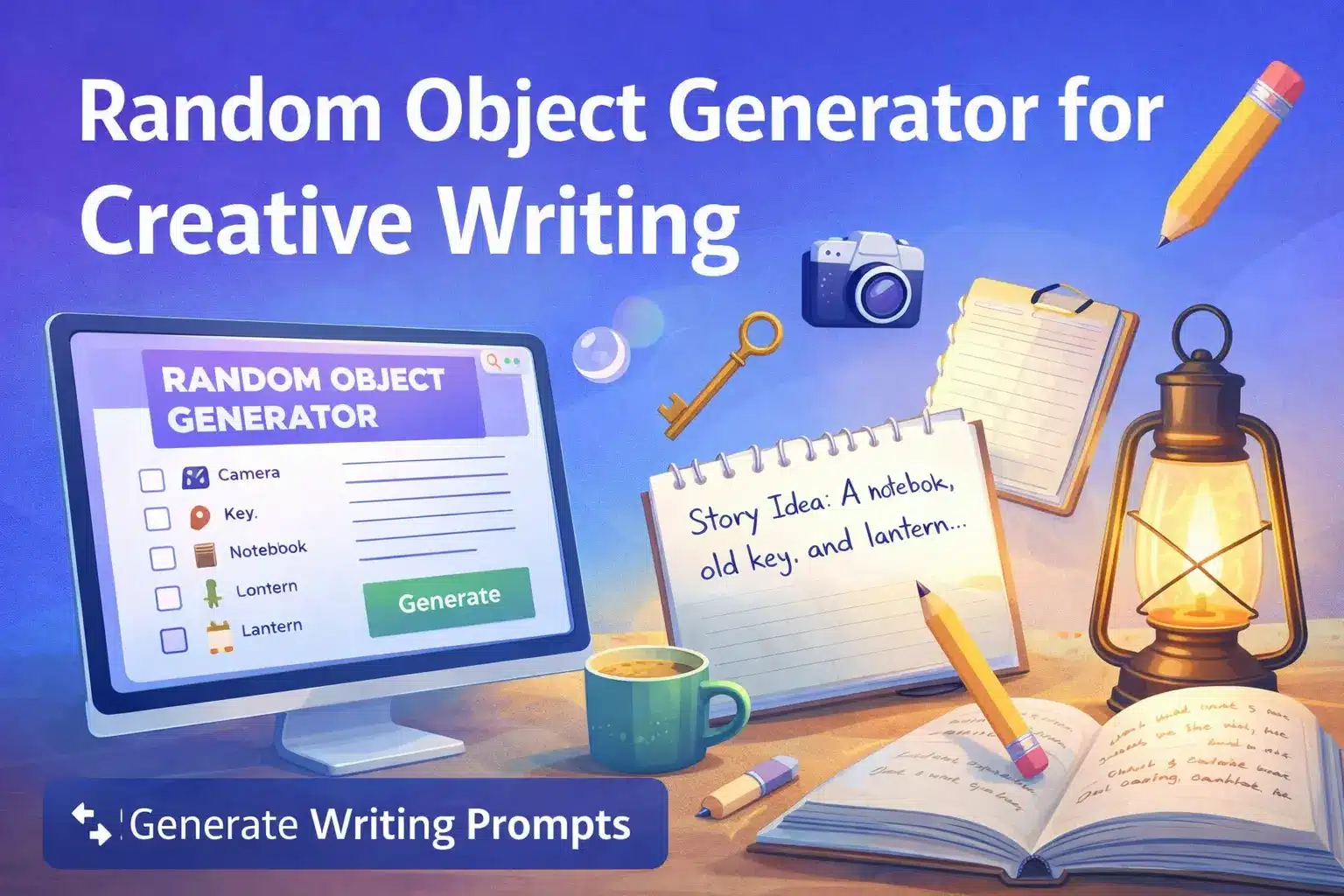
Random Object Generator for Creative Writing
Creative writing often starts with a simple idea, but sometimes writers struggle to find inspiration. When your mind feels blank, a random object generator can become a powerful tool to spark imagination and start new stories.
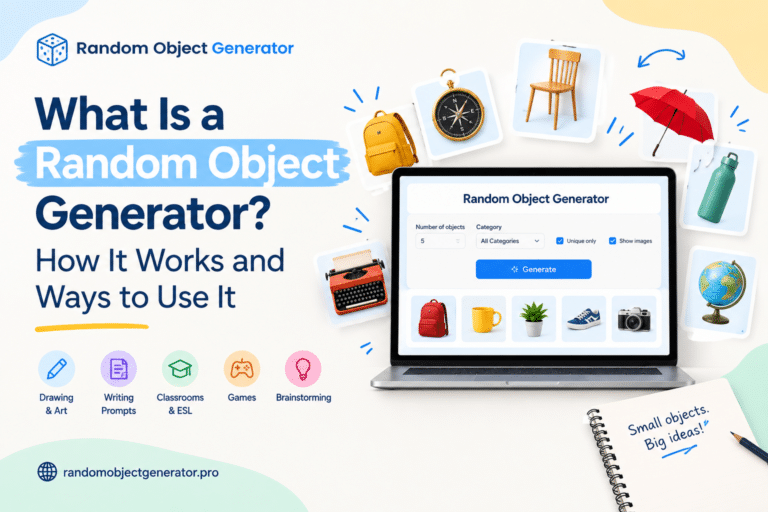
A random object generator instantly produces everyday items at random. These objects can serve as prompts for stories, characters, scenes, and creative exercises. Instead of spending time thinking about ideas, writers can simply generate random objects and begin building a story around them. It works like an object writing generator, turning everyday items into fresh story ideas.
If you want to try it yourself, you can use our Random Object Generator tool to instantly create unexpected writing prompts.
How Random Objects Inspire Creative Writing
Writers often rely on prompts to unlock creativity. Random objects work well because they introduce unexpected ideas that force your brain to think differently.
For example, imagine generating these objects:
- Broken Clock
- Old Key
- Wooden Chair
From just these three objects, a writer could create multiple story ideas:
- A mysterious key that unlocks time travel
- A haunted chair that reveals memories
- A clock that stopped at the moment a secret was discovered
This technique encourages writers to explore unusual combinations and develop unique narratives.
Ways to Use a Random Object Generator for Writing
There are many creative ways writers can use random objects to build stories and improve writing skills.
1. Story Starters
Generate one random object and create a story around it. The object can become the central theme of the plot.
Example:
If the generator shows camera, your story could begin with a photographer who discovers strange images appearing on film.
2. Character Inspiration
Random objects can help develop interesting characters.
Example:
If the object is compass, the character might be an explorer searching for a hidden location.
3. Scene Building
Generate multiple objects and use them in a single scene.
Example objects:
- Lantern
- Map
- Backpack
These could form a scene where an adventurer prepares for a dangerous journey.
4. Writing Challenges
Teachers and writing groups often use random objects to create writing challenges. Participants must include all generated items in their stories.
This technique improves creativity and storytelling skills.
Benefits of Using a Random Object Generator
Using a random object generator for creative writing offers several advantages.
Boosts Creativity
Unexpected objects encourage writers to think beyond typical ideas.
Removes Writer’s Block
When inspiration runs out, random prompts provide an instant starting point.
Improves Storytelling Skills
Writers learn to connect unrelated ideas into meaningful narratives.
Saves Time
Instead of brainstorming manually, writers can quickly generate ideas.
Our random object generator helps writers get inspiration instantly with just one click.
Example Creative Writing Exercise
Try this quick exercise using a random object generator.
Step 1: Generate three objects.
Step 2: Create a short story using all three items.
Step 3: Limit yourself to 300 words.
Example objects:
- Umbrella
- Notebook
- Train Ticket
Story idea:
A traveler finds a mysterious notebook inside an umbrella left behind on a train.
This simple exercise can quickly turn into a full story.
Who Can Use a Random Object Generator
A random object generator is useful for many different people.
Writers
Authors can create story prompts and new plot ideas.
Students
Students can improve creative writing skills through practice exercises.
Teachers
Teachers can use random objects for classroom writing activities.
Game Designers
Game developers can use random objects to create quests and story elements.
Try this object writing prompt generator for fresh writing ideas
If you need instant inspiration for your next story, try our Random Object Generator. It quickly produces random items that can become the foundation of creative writing prompts, stories, and exercises.
Using random prompts is one of the easiest ways to overcome writer’s block and explore new storytelling ideas.
Writing Exercises That Turn Random Objects Into Stories
These exercises work for beginners and experienced writers alike. Set a timer, generate your objects, and write without stopping to edit. The goal is momentum, not perfection.
The Five-Minute Freewrite
Generate one random object and write about it for five minutes straight. Do not lift your pen or stop typing. Describe what it looks like, who owns it, where it has been, and what secrets it keeps. When the timer ends, read back what you wrote and circle the most interesting line. That line is often the seed of a story.
Object Backstory
Pick a random object and write its life story in 200 words. A chipped mug might have survived three moves, one breakup, and a toddler. Give the object a voice if you like, or write about the people who touched it. This exercise trains you to find emotion in ordinary things, which is a skill every fiction writer needs.
The Sensory Inventory
Generate an object and describe it using all five senses without naming it. What does it sound like when tapped? What does it smell like? How does its surface feel? Write one sentence per sense. This sharpens descriptive writing and helps you show rather than tell.
POV Shift
Write a short scene where your random object appears, then rewrite the same scene from the object’s point of view. A lost umbrella sees the world very differently than the commuter who left it behind. This exercise builds empathy for characters and loosens up stiff narration.
Dialogue Only
Generate two objects and write a conversation between the people arguing over them. No narration allowed, just dialogue. A brother and sister fighting over who gets the old camera, for example. Constraints force you to reveal character through speech, which strengthens all your dialogue.
Prompt Categories to Explore
If you generate in bulk, sort your objects into these categories. Each one pushes your writing in a different direction.
Story Starters
Use one object as the opening image of your story. The first line mentions it, and the plot grows from there. A rusty key on a doorstep. A phone that will not stop ringing. Start with the object and let the questions it raises pull you forward.
Character Prompts
Assign each character an object they carry everywhere. A nurse with a lucky coin. A detective with a broken watch. The object becomes a window into backstory and personality, and it gives you something concrete to return to in every scene.
Setting Prompts
Generate five objects and build a room around them. A candle, a stack of letters, a cracked mirror, a train ticket, a dead plant. Who lives here? What happened? Settings built from specific objects feel real because readers can picture every detail.
Genre Mashups
Pair a random object with a genre you never write. A toaster in a horror story. A sword in a romantic comedy. The mismatch forces creative problem solving and often produces your most original ideas.
How to Turn a Random Object Into a Story Idea
Follow these steps the next time you generate an object. The whole process takes about fifteen minutes.
Step 1: Study the object and find one unusual detail. A chipped handle, a faded label, a strange smell. That detail becomes your story’s anchor.
Step 2: Give the object an owner with a problem. Who needs this object right now, and why? A character with a clear need gives your story momentum.
Step 3: Add pressure with a deadline. The character must use the object before midnight, before the train leaves, before someone finds out. Deadlines create tension.
Step 4: Write the worst version first. Do not aim for perfect prose. Get the idea down, then revise. The object gives you a starting point; your draft gives you something to improve.
Frequently Asked Questions
How do you use a random object generator for writing?
Generate one or more objects and treat them as creative constraints. Use a single object as a story starter, assign objects to characters, or build a scene around several items. Set a timer for ten minutes and write without stopping. The randomness forces your brain to make unexpected connections, which is exactly what breaks through creative blocks and produces original ideas.
Can a random object generator cure writer’s block?
It cannot guarantee a cure, but it is one of the fastest ways to get unstuck. Writer’s block often comes from too many choices. A random object narrows your focus to one concrete thing, which makes starting easier. Many writers find that once they begin describing or building a story around the object, momentum returns and the block fades.
What are good random writing prompts?
Good prompts are specific enough to spark ideas but open enough to allow creativity. A single vivid object like a broken compass works better than an abstract concept. Pair objects with constraints, such as write a scene using three objects, or tell a story from an object’s point of view. The best prompts surprise you and force unexpected connections.
How can teachers use random objects for writing exercises?
Teachers can generate objects and ask students to write a paragraph, story, or poem featuring them. Use objects for vocabulary building by having students describe items using all five senses. Group activities work well too: each student gets an object and the class weaves them into a collaborative story. It keeps lessons fresh and engages reluctant writers.
Can I use a random object generator for story ideas?
Yes! A random object generator is perfect for story ideas. Pick an object and build your story around it. Who owns it? Where did it come from? What secret does it hold? Writers use this trick to break through blocks and discover unexpected plot twists. Try it with our free tool.


2 Comments